Immediate Implants vs Conventional Implants Clinical Considerations Explained
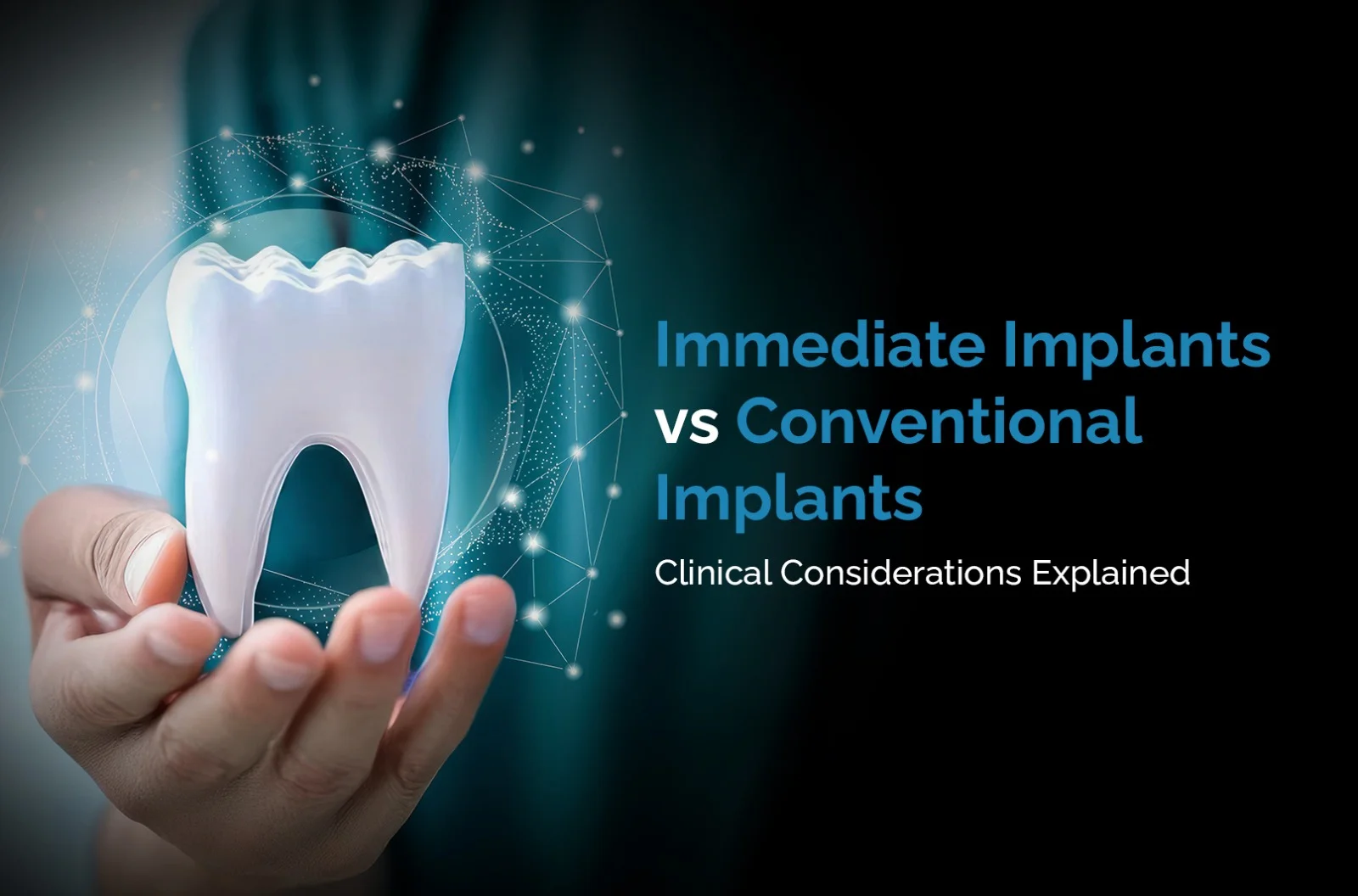
Immediate Implants vs Conventional Implants: Clinical Considerations Explained.
Tooth loss affects more than appearance. It influences chewing efficiency, bone stability, speech, and long-term oral balance. Dental implants have become a predictable solution for replacing missing teeth, offering durability and structural support.
However, not all implant procedures follow the same timeline. Patients are often introduced to two approaches — immediate implants and conventional implants. While both aim to restore function and aesthetics, the clinical pathway differs.
Understanding the considerations behind each method helps patients make informed decisions grounded in long-term stability rather than speed alone.
What Are Immediate Implants?
Immediate implants are placed at the same appointment as tooth extraction. Instead of waiting for the area to heal, the implant fixture is positioned directly into the fresh extraction site.
In selected cases, a temporary crown may also be placed soon after, allowing the patient to leave without a visible gap — particularly important in the aesthetic zone (front teeth).
Potential Advantages
- Reduced overall treatment timeline
- Fewer surgical interventions
- Preservation of natural gum contour
- Psychological comfort of avoiding a missing tooth phase
However, immediate placement is not suitable for every situation.
What Are Conventional Implants?
Conventional implants follow a staged protocol. After extraction, the area is allowed to heal for several weeks or months. Once bone healing is adequate, the implant is placed. A further healing phase ensures osseointegration — the biological fusion between bone and implant — before final restoration.
This approach has long been considered the gold standard due to its structured and predictable timeline.
Advantages of Conventional Placement
- Allows resolution of infection before implant placement
- Suitable in cases of significant bone loss
- Enables careful bone grafting if required
- Often recommended in complex or medically sensitive cases
Clinical Considerations That Determine the Approach
The decision between immediate and conventional implants is not preference-driven — it is diagnosis-driven.
1. Bone Quality and Volume
Adequate bone support is essential for immediate implant stability. If bone density is compromised or insufficient, a delayed approach may offer better long-term results.
2. Presence of Infection
Active infection at the extraction site requires careful evaluation. While some infections can be managed during immediate placement, uncontrolled infection may necessitate a staged approach.
3. Gum Health and Biotype
In the aesthetic zone, gum thickness and contour are critical. Immediate implants may help preserve natural tissue architecture, but only when biological conditions are favourable.
4. Primary Stability
For an implant to integrate successfully, it must achieve mechanical stability at placement. If sufficient stability cannot be achieved immediately, conventional timing is safer.
5. Patient Factors
Systemic health, smoking history, diabetes control, oral hygiene habits, and bruxism (grinding) influence implant success and must be evaluated carefully.
Immediate Does Not Mean Rushed
A common misconception is that immediate implants are simply a faster version of conventional implants. In reality, immediate placement demands even greater precision in diagnosis and surgical execution.
The clinical objective remains the same: long-term stability, functional harmony, and aesthetic integrity.
Long-Term Success Depends on Planning
Both immediate and conventional dental implants can achieve excellent outcomes when appropriately indicated. The success of either approach depends less on speed and more on:
- Comprehensive evaluation
- Structured surgical planning
- Bone and gum health assessment
- Careful restorative execution
- Long-term maintenance
Implants are not isolated replacements; they are part of a functional system that must align with bite dynamics and surrounding structures.
Which Approach Is Right for You?
There is no universally superior method. The correct choice depends on individual anatomy, oral condition, and overall health.
At Radiance, implant decisions are guided by detailed imaging, clinical judgement, and long-term rehabilitation planning. The objective is not simply to replace a missing tooth, but to restore balance and ensure durability over time.
When planned responsibly, both immediate implants and conventional implants can provide predictable, natural-looking results that support confidence and comfort for years to come.