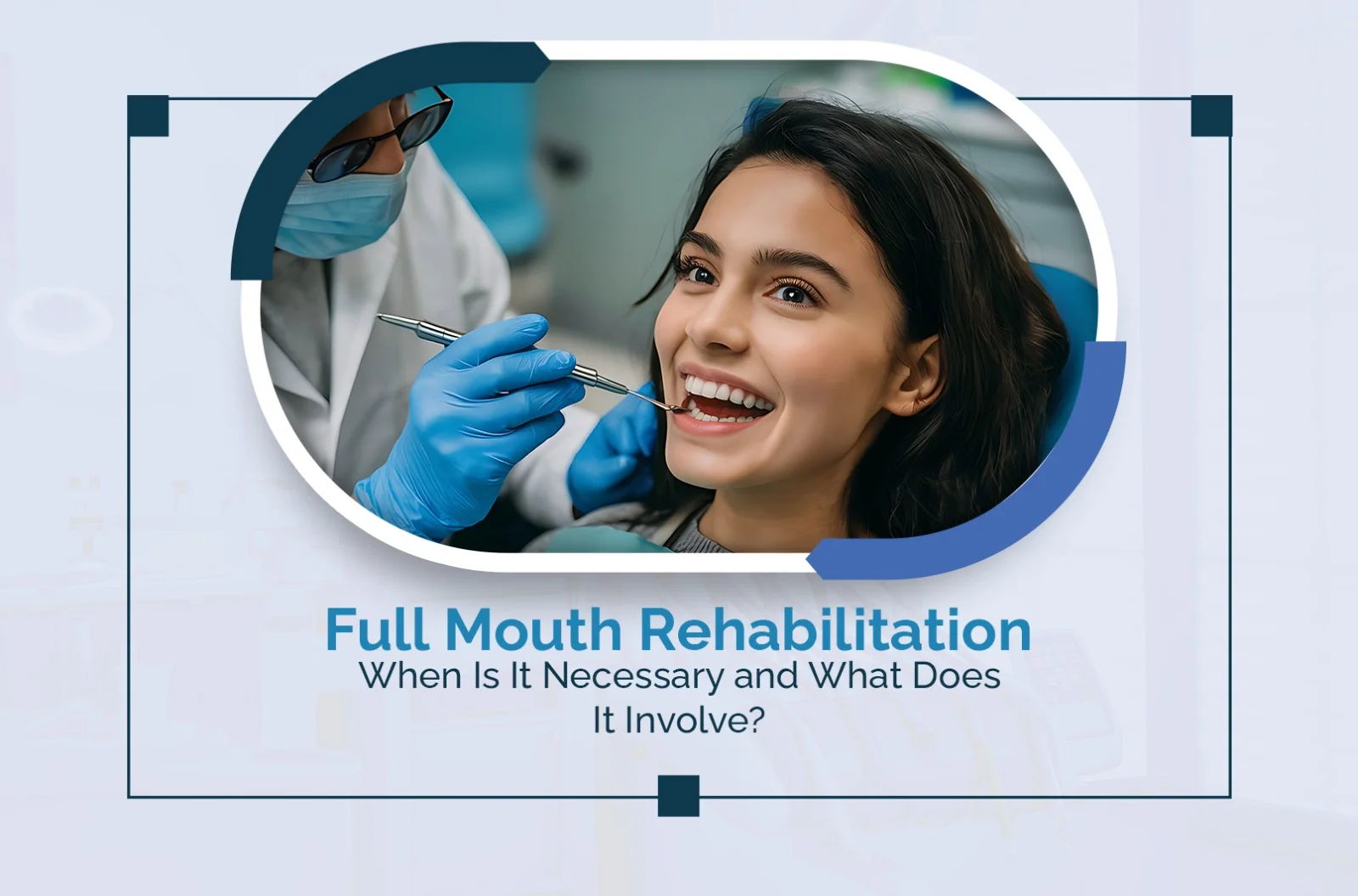
Full Mouth Rehabilitation When Is It Necessary and What Does It Involve
Full Mouth Rehabilitation: When Is It Necessary and What Does It Involve?
Oral health rarely declines overnight. More often, it is a gradual process — a missing tooth left untreated, worn enamel from years of grinding, repeated fillings on the same teeth, or bite imbalance that quietly strains the jaw. Over time, these concerns compound. What begins as isolated issues can evolve into functional difficulty, aesthetic compromise, and discomfort.
This is where full mouth rehabilitation becomes relevant.
Full mouth rehabilitation is not a cosmetic procedure. It is a structured, comprehensive treatment approach designed to restore function, stability, and aesthetics across the entire mouth. Rather than addressing individual teeth in isolation, it considers the bite, jaw alignment, gum health, bone support, and long-term durability of restorations — all as part of one unified plan.
When Is Full Mouth Rehabilitation Necessary?
Not every dental concern requires comprehensive reconstruction. However, certain patterns indicate that a broader evaluation may be needed.
1. Multiple Missing Teeth
When several teeth are missing, chewing efficiency declines and surrounding teeth begin to shift. This alters the bite and increases stress on remaining teeth, often accelerating wear or fractures.
2. Severe Tooth Wear
Teeth that appear shortened, flattened, or sensitive may indicate long-term grinding (bruxism) or acid erosion. Advanced wear affects both aesthetics and jaw stability.
3. Repeated Dental Failures
If crowns, fillings, or bridges repeatedly fail, it may suggest an underlying bite imbalance rather than material weakness.
4. Jaw Pain or Bite Discomfort
Chronic jaw tension, clicking, or difficulty chewing can be related to occlusal disharmony — where upper and lower teeth do not align properly.
5. Advanced Gum Disease with Structural Damage
When periodontal disease leads to bone loss and tooth mobility, treatment must extend beyond cleaning to structural reconstruction.
6. Long-Standing Neglect
Patients who have avoided dental care for years often require a comprehensive strategy rather than piecemeal treatment.
In such cases, full mouth rehabilitation offers a predictable pathway toward restoring oral health.
What Does Full Mouth Rehabilitation Involve?
Every rehabilitation plan is individualised. There is no standard template. However, the process typically follows a disciplined, phased structure.
1. Comprehensive Diagnosis
The foundation of successful rehabilitation lies in detailed evaluation:
- Digital imaging and radiographs
- Bite analysis
- Assessment of gum and bone health
- Evaluation of previous restorations
- Functional and aesthetic analysis
This stage is critical. Treatment without complete diagnosis risks repetition of past failures.
2. Strategic Treatment Planning
Once evaluation is complete, a step-by-step roadmap is developed. This may involve:
- Dental implants for missing teeth
- Crowns or bridges to restore strength
- Veneers where aesthetic correction is appropriate
- Orthodontic alignment in selected cases
- Gum therapy or regenerative procedures
- Bite correction to restore balance
The objective is not merely replacement of teeth, but restoration of structural harmony.
3. Phased Execution
Rehabilitation is usually completed in stages:
- Stabilising gum health
- Addressing infections or root canal requirements
- Placing implants where necessary
- Restoring teeth with durable materials
- Final bite refinement and adjustments
Each phase builds toward long-term stability.
4. Long-Term Maintenance
Rehabilitation does not conclude with final restorations. Regular monitoring ensures:
- Implant stability
- Bite balance
- Protection from grinding
- Early management of minor concerns
Maintenance protects the investment in comprehensive care.
Is Full Mouth Rehabilitation Only for Older Patients?
Not necessarily. While age-related wear is common, younger individuals with severe grinding, trauma, congenital absence of teeth, or repeated dental failures may also benefit from structured rehabilitation.
The determining factor is not age — it is the extent of structural compromise.
Benefits of a Comprehensive Approach
When properly planned and executed, full mouth rehabilitation offers:
- Improved chewing efficiency
- Balanced jaw function
- Enhanced facial support
- Long-term durability
- Reduced need for repeated corrective treatments
- A natural, confident smile
More importantly, it restores comfort and predictability.
Rehabilitation vs Patchwork Dentistry
One of the most common misconceptions is that replacing teeth individually achieves the same result as full rehabilitation. In reality, patchwork dentistry often overlooks bite dynamics and long-term force distribution.
Comprehensive rehabilitation treats the mouth as a unified system. It addresses root causes, not just symptoms.
When to Seek an Evaluation
You may consider a professional assessment if you experience:
- Difficulty chewing
- Frequent breakage of dental work
- Worn or shortened teeth
- Jaw pain or stiffness
- Multiple missing teeth
- Dissatisfaction with previous dental outcomes
Early evaluation prevents progression.
A Structured Path to Long-Term Stability
Full mouth rehabilitation is a commitment — both clinically and personally. It requires careful planning, disciplined execution, and clear communication.
At Radiance, rehabilitation is approached with structured diagnosis, precision-led treatment planning, and long-term accountability. Every stage — from evaluation to final restoration — is guided by clinical judgement and a commitment to predictable outcomes.
When undertaken responsibly, comprehensive rehabilitation transforms not only appearance but function, comfort, and confidence. Dentistry, at its best, restores harmony — allowing patients to eat, speak, and smile without hesitation.
If you are considering a comprehensive evaluation, a detailed clinical assessment can provide clarity and direction toward long-term oral stability.