Can a Root Canal Treated Tooth Last a Lifetime
Can a Root Canal-Treated Tooth Last a Lifetime?
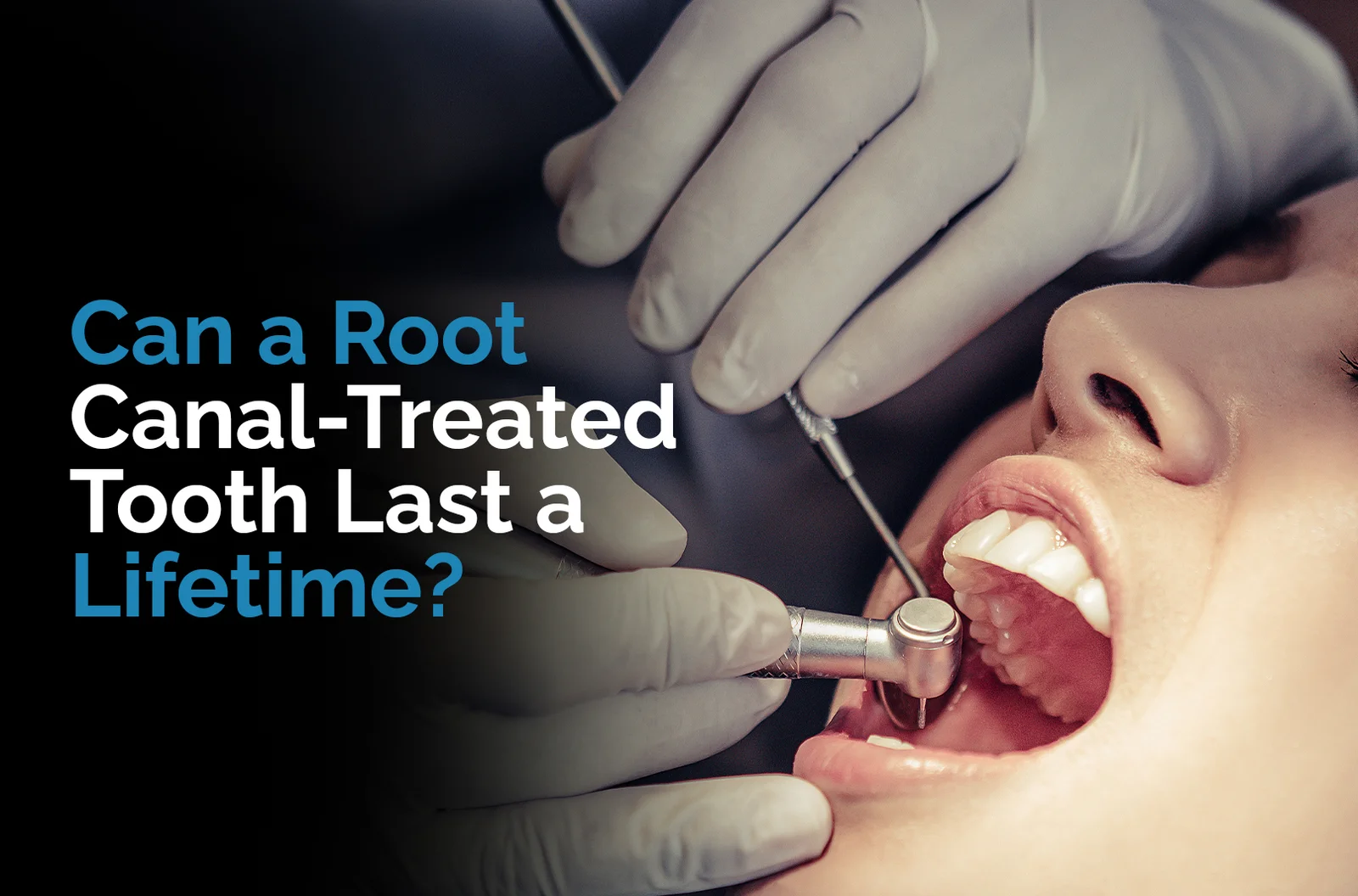
A root canal treatment often carries unnecessary anxiety. Many patients assume that once a tooth has undergone a root canal procedure, its lifespan is limited. In reality, when performed correctly and restored responsibly, a root canal-treated tooth can function comfortably for decades — and in many cases, even a lifetime.
The outcome depends less on the procedure itself and more on diagnosis, technique, and long-term maintenance.
What Happens During a Root Canal?
A root canal treatment is performed when the inner pulp of the tooth becomes infected or inflamed due to deep decay, cracks, trauma, or repeated dental procedures.
The process involves:
- Removing infected pulp tissue
- Cleaning and disinfecting the root canals
- Sealing the canal space
- Restoring the outer structure of the tooth
Once treated, the tooth is free of infection but no longer contains living pulp tissue. It remains functional, supported by surrounding bone and ligaments.
Why Some Root Canal-Treated Teeth Fail
While root canal therapy has a high success rate, certain factors may compromise longevity:
1. Inadequate Sealing
If the canal system is not thoroughly cleaned and sealed, bacteria may persist or re-enter.
2. Delayed Final Restoration
A root canal-treated tooth is more fragile than a vital tooth. Without timely placement of a crown or protective restoration, it may fracture.
3. Structural Weakness
Teeth with significant loss of enamel or large pre-existing cavities require reinforcement to withstand chewing forces.
4. Bite Imbalance
Excessive pressure due to grinding or misalignment may cause cracks over time.
5. Undetected Cracks
Vertical root fractures, though uncommon, can compromise prognosis.
Failure is rarely sudden. It usually reflects structural or biological factors that were not addressed comprehensively.
What Increases the Longevity of a Root Canal-Treated Tooth?
Long-term success depends on careful planning beyond the procedure itself.
Timely Crown Placement
Most posterior (back) teeth require crowns after root canal therapy. A crown restores strength and distributes bite forces evenly.
Precision in Cleaning and Shaping
Modern protocols and magnification enhance accuracy in removing infection and sealing canal systems.
Bite Assessment
Adjusting occlusion reduces undue stress on the treated tooth.
Regular Follow-Up
Periodic radiographic evaluation ensures early detection of any reinfection.
Is a Root Canal-Treated Tooth Weaker?
The tooth does not become “dead,” but it does lose internal nourishment from the pulp. Over time, it may become more brittle. This is why structural reinforcement is critical.
With proper restoration and monitoring, the treated tooth can perform as effectively as neighbouring teeth.
When Is Re-Treatment Necessary?
In some cases, a tooth may require re-root canal therapy (Re-RCT). This may occur due to:
- New decay
- Leakage around an old restoration
- Incomplete sealing from previous treatment
- Complex canal anatomy not addressed initially
Re-treatment aims to eliminate residual infection and preserve the natural tooth whenever possible.
Extraction vs Preservation
One of the most important principles in dentistry is preservation of natural tooth structure. A successfully treated root canal tooth maintains bone levels, supports bite balance, and prevents shifting of adjacent teeth.
Extraction should only be considered when structural integrity cannot be predictably restored.
So, Can It Truly Last a Lifetime?
Yes — provided:
- The infection is completely eliminated
- The tooth is properly restored
- Bite forces are managed
- Oral hygiene is maintained
- Regular evaluations are conducted
The longevity of a root canal-treated tooth is not defined by the procedure alone. It is determined by the comprehensive care that surrounds it.
A Responsible Approach to Tooth Preservation
Root canal therapy is not simply about removing infection — it is about safeguarding a natural tooth within a functional system. Its success depends on accuracy, reinforcement, and ongoing evaluation.
At Radiance, endodontic treatment is guided by detailed diagnosis, precision-driven protocols, and thoughtful restoration planning. Equal emphasis is placed on structural integrity and bite harmony to ensure that the treated tooth continues to perform reliably over time.
When approached with clinical discipline and long-term foresight, a root canal-treated tooth can remain stable, comfortable, and fully functional for many years — often for a lifetime.